


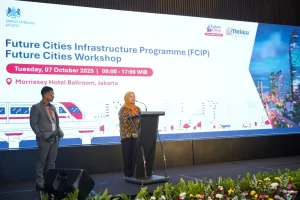
Jakarta — The Future Cities Infrastructure Programme (FCIP) has officially kicked off with strong joint commitments from the UK and Indonesia to support sustainable and climate-resilient urban development.
To advance these shared goals, the workshop brought together Indonesian ministries, financial institutions, development partners, and representatives from provincial and local governments across the country to exchange insights on Indonesia’s sustainable infrastructure landscape and project development challenges — focusing on three key sectors: Bus Rapid Transit (BRTs), solid waste management, and flood resilience.
As part of MELAJU, a UK–Indonesia partnership for sustainable infrastructure, FCIP aims to expand access to financing for climate-resilient infrastructure by improving project quality through targeted technical assistance and knowledge exchange.
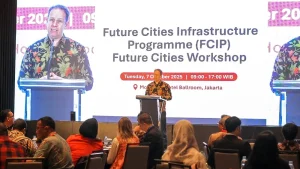
Opening the workshop, Matthew Downing, British Deputy Ambassador to Indonesia, introduced MELAJU — the UK–Indonesia sustainable infrastructure platform and its initiatives including Future Cities Infrastructure Programme, which contribute to advancing Indonesia’s 2045 Golden Vision and Net Zero 2060 targets through practical and inclusive collaboration.
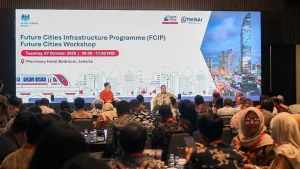
Interactive sessions explored the challenges and opportunities in funding and financing climate-resilient infrastructure projects. The first panel featured Mr. Abdul Malik Sadat Idris, ST, M.Eng., Deputy for Infrastructure at Bappenas (Indonesia’s National Planning Agency), who underscored the importance of robust project preparation as a key factor in accessing financing.
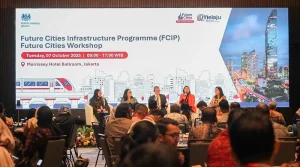
The second panel brought together perspectives from key players in Indonesia’s infrastructure financing ecosystem — including Bappenas, the World Bank, PT Sarana Multi Infrastruktur, and Indonesia Infrastructure Finance — to discuss strategies for strengthening collaboration and mobilising resources.
During the breakout sessions, we focused on identifying current challenges and potential FCIP support for projects in bus rapid transit, solid waste management, and flood management. These discussions also showcased FCIP’s early engagements with several provincial and local governments, with Pekanbaru, Bali, and Cilegon confirmed as the initial regions to receive technical support.
The Bus Rapid Transit (BRT) session explored potential areas of FCIP assistance, such as establishing transport-focused regional enterprises (BUMDs), managing multi-year contracts, and enabling access to sustainable financing.
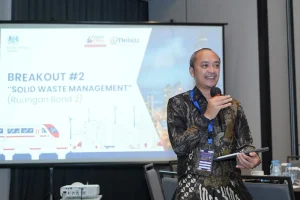
The solid waste management session presented diagnostic findings from Cilegon’s waste value chain, along with case studies from Bologna and Rome, Italy. Local governments from Surabaya, Malang, and Padang also shared experiences in strengthening their waste management systems.
The flood management session discussed potential FCIP support for inclusive, climate-resilient infrastructure, including the application of nature-based solutions and innovative financing mechanisms.
The workshop concluded with a shared call to action — inviting cities across Indonesia to collaborate in shaping a greener, more resilient, and inclusive urban future.